
Meta GEM: How Meta’s New AI Brain Is Changing Your Facebook & Instagram Ads
TL;DR (Approx. 9-minute read) 🧠⚡
Meta just rolled out GEM, a gigantic AI “central brain” that quietly started running your Meta Ads since Q2 2025. It’s giving platform-wide lifts of about 5% more conversions on Instagram and 3% on Facebook Feed by learning from both paid ads and organic content, then feeding that knowledge into the rest of Meta’s ad systems.
For you, this means three big shifts:
less manual targeting, more automation;
creative and data quality matter way more than micro-tweaking settings;
and GEM now works together with Andromeda and Lattice as a 3-layer AI stack that decides which ads show, to whom, and in what order
If you lean into this instead of fighting it, combine GEM’s optimization with a clean funnel on Systeme.io (tracking, landing pages, email automations), and feed Meta with strong creatives + clean conversion data, you can ride this wave instead of getting left behind. 😝
Meta GEM 101: What Actually Changed (In Plain English) 😂
If your Meta Ads suddenly started performing differently in 2025 — better some weeks, weird other weeks — and you didn’t really touch anything…
you’re not crazy.
Meta just plugged in a new “central brain” called GEM (Generative Ads Recommendation Model). It’s their biggest ad AI model ever, built at the same scale as large language models like ChatGPT, and it’s already live across Facebook and Instagram.
According to Meta’s own engineering blog and multiple third-party breakdowns, GEM is:
a massive foundation model trained on thousands of GPUs
4x more efficient at driving performance gains than their older ranking models
2x better at sharing what it learns with the rest of their ad systems
responsible for a measured ~5% lift in ad conversions on Instagram and 3% on Facebook Feed in Q2 2025, with those benefits doubling in Q3 after architecture upgrades
Translation:
Meta didn’t just tweak the algorithm.
They replaced the f*cking brain.
The Real Problem GEM Is Solving (And Why Your Old Playbook Feels “Off”)
Here’s the problem Meta was facing:
Billions of user interactions every day
Organic + paid content across Facebook, Instagram, Messenger, WhatsApp
Tons of creatives, formats, objectives, placements
And a post-ChatGPT world where brands are pumping out way more creatives than before
The old system treated placements like separate universes: Facebook Feed had one model, Instagram Stories another, Reels another. They didn’t fully “talk” to each other.
So what happened in your ad account?
Some campaigns randomly got better without clear reasons
Others got chaotic during rollout (CPAs spiked for a bit, then stabilized)
Meta removed more and more manual controls and pushed Advantage+ everything
From a marketer’s POV, it started to feel like:
“I’m losing control over my ads.”
“I change less… but things move more.”
“My old micro-targeting tricks don’t hit like they used to.”
Why This Hurts If You Ignore It
If you pretend nothing changed and keep running ads like it’s 2022–2023, you’ll feel the pain in three places:
You will waste money fighting the algorithm
Restricting placements, forcing tiny audiences, and constant bid tweaks now fight against how GEM learns. Meta even recommends giving campaigns longer learning periods (7+ days) and running across multiple surfaces so GEM can transfer knowledge and optimize globally.Your creative will “cap” your performance
GEM is designed for a world where there’s a constant stream of creatives. If you’re feeding it 2–3 static ads and expecting miracles, it has nothing to work with. Meanwhile, brands pumping in diverse creatives are getting the best of its optimization.You’ll get frustrated by the black box
GEM is better at predicting who should see what, but it’s also less transparent. Why did Instagram Reels crush it this week while Facebook Feed dropped? Was it seasonality, GEM, creative, or audience shift? It’s harder to isolate.
So let’s not fight reality.
Let’s understand it and use it.
Meet The New Stack: GEM + Andromeda + Lattice (Simple Version) 💪
Here’s the simplest mental model I’d use with a client.
Think of Meta’s AI ads system as a 3-layer stack:
Andromeda = The infrastructure + retrieval engine
Uses high-powered hardware (Nvidia chips) and improved retrieval architecture
Pulls a pool of potentially relevant ads for each user, based on past behavior and context
GEM = The central brain
Runs on top of Andromeda
Learns from both organic and paid content across Meta apps
Understands long sequences of user behavior (not just “this one click”)
Finds patterns like: “When this type of person does X, they’re likely to buy Y in 3–7 days”
Lattice = The ranker / referee
Receives candidate ads + GEM’s insights
Ranks which ads get shown in what order, optimizing for engagement and conversions across surfaces
Meta reports Lattice itself improved ad quality by around 8% when they rolled it out at scale
Put simply:
Andromeda finds the options.
GEM decides what’s relevant and learns from everything.
Lattice decides who actually wins the auction and shows up in the feed.
You don’t “turn this on.”
You’re already inside this system.
How GEM Changes The Way Your Meta Ads Behave
Let’s break down the biggest practical shifts you’ll actually feel in your ad account.
Performance Bumps Without Structural Changes
GEM started rolling out in Q2 2025. Meta and multiple breakdowns report:
~5% more conversions on Instagram
~3% more conversions on Facebook Feed
With Q3 architectural improvements that doubled the benefit they get per unit of data and compute
Meta didn’t ask you to change your campaigns.
The lift came from how their AI reads behavior and shares knowledge between surfaces.
So if you noticed:
“We didn’t touch anything but results improved a bit.”
Or “Things dipped during May–June then recovered.”
That was likely GEM learning, recalibrating, and then stabilizing.
Cross-Surface Learning (Your Data Now Talks To Itself)
Before GEM, your Instagram optimization didn’t fully help your Facebook campaigns. Now:
Someone who engages with your Reels may inform how your ads show up on Feed, Stories, or even Messenger
If a user tends to watch explainer videos on Instagram but ignores them on Facebook, delivery adapts at the user level
Timing adjusts based on when that user usually actually buys, not just when they scroll
So instead of “I’ll run this only on Stories because that worked last year,”
it’s more like, “I’ll give GEM all placements and let it learn where each person converts.”
Less Manual Targeting, More Broader Signals
Meta has been systematically removing granular targeting options and pushing Advantage+ campaigns. GEM accelerates this.
It prefers:
Broader audiences
Multi-placement delivery
Rich conversion data
Over:
1% lookalikes layered with 5 interest stacks
Narrow 10k-person audiences
Hard placement restrictions
If you’re still trying to “out-target” the AI, you’re making its life harder and your performance more volatile.
Creative + Data Are Now Your Real Levers
Here’s the big shift:
In the GEM + Andromeda era, “media buying skill” is less about micro-tweaks and more about:
The quality and diversity of your creatives
How clean your data and tracking are
Your funnel and follow-up after the click
Meta’s own case studies + independent reports show Advantage+ creative and AI-led optimization increasing ROAS significantly (Meta previously cited a 22% ROAS lift for Advantage+ creative features alone).
So you win not by pushing more buttons…
but by feeding better inputs.
How This Plays With Andromeda (Why “Targeting Is Dead” Is Half-True)
You’ve probably seen headlines like: “Targeting is dead. Creative is king.”
That’s coming largely from the Andromeda update.
Here’s what’s actually happening between GEM and Andromeda:
Andromeda’s retrieval engine pulls a huge set of ad candidates based on a user’s behavior, interests, and context
GEM sits on top, using sequence learning (what they saw before, what they did after) to predict what ad makes sense next
Lattice then ranks those options so the “best” combination of ad + user + moment wins the auction
So yes, detailed manual targeting is losing power.
But no, targeting isn’t “dead.” It just moved:
From “who you select in Ads Manager”
To “how your creatives and events signal who you’re really for”
Your real targeting is now:
Your creative hooks
Your offer positioning
Your conversion events (standard + custom)
Your website behavior (tracked via Pixel + CAPI)
Your funnel flows (what happens after they opt in or buy)
What This Means For Your Business (Straight Talk)
Here’s the bottom line I’d tell a client over coffee:
If you:
Have a solid funnel
Track conversions properly
Give GEM broad room to work
Feed it consistent creative tests
You’ll probably benefit from this shift — sometimes massively.
If you:
Rely on super manual targeting hacks
Constantly reset learning with daily tweaks
Run with broken or incomplete tracking
Have weak offers and weak landing pages
GEM will simply discover… that you’re not the best choice to show.
And it’ll quietly route traffic toward competitors with better funnels and cleaner signals.
Action Plan: How To Adapt Your Meta Ads To GEM (Jeff-Style, No Fluff)
Let’s make this tactical.
Here’s how I’d adjust your Meta setup step-by-step — and where Systeme.io comes in.
Step 1: Stop Fighting The Learning Phase
Practical shifts:
Let campaigns run at least 7 days before major changes
Avoid turning things on/off every 24–48 hours
Consolidate overly fragmented ad sets (you don’t need 20 tiny ad sets anymore)
Your job now is to give GEM enough room + time to see patterns.
Not to “outsmart” it with constant tinkering.
Step 2: Go Broad (But With Smart Inputs)
Move away from crazy-narrow targeting. Instead:
Use broad or large lookalike audiences
Layer minimal filters (age, country, maybe language)
Embrace Advantage+ where it makes sense (shopping, app, etc.)
Then let your creatives and your funnel do the job of filtering.
Step 3: Fix Your Tracking And Events (This Is Huge)
GEM learns heavily from conversions and sequence behavior — what people do before and after they see your ads.
Here’s what I’d do inside your stack:
Install Meta Pixel + Conversion API properly
Map out key events:
Lead / Initiate Checkout / Add to Cart / Purchase
Plus any custom events that matter (BookedCall, WebinarRegistered, etc.)
Sync those events into your Systeme.io funnels:
Add pixel tracking to all pages (opt-in, checkout, thank-you)
Fire standard + custom events from buttons, forms, and order bumps
Confirm events in Events Manager are firing with enough volume
If GEM can’t see your real business outcomes, it will optimize for the wrong signals.
Step 4: Architect Your Funnel In Systeme.io For The GEM Era
Traffic is getting smarter.
If the destination is weak, you’re just wasting better clicks.
Inside Systeme.io, I’d build:
A clean, fast-loading landing page
Clear promise above the fold
Strong offer (lead magnet, trial, low-ticket product, etc.)
Social proof and objection handling
Mobile-first layout
A simple but intentional funnel
Opt-in or purchase page
Upsell / order bump if relevant
Thank-you page with next steps
Automated email sequence:
Day 0–3: indoctrination + value
Day 4–7: case studies, FAQs, soft pitch
Day 8–14: offer-focused reminders, urgency where appropriate
Clear segmentation
Tag leads by source (Meta Ads, campaign, angle)
Trigger different sequences based on behavior (clicked, not clicked, visited sales page but didn’t buy, etc.)
Systeme.io gives you the “post-click” personalization engine.
GEM + Andromeda bring you high-intent clicks.
Together they compound.
Step 5: Feed GEM A Buffet Of Creatives, Not A Snack
Remember: Andromeda + GEM + Lattice are built for a world where there’s a “Cambrian explosion” of creative variations
So instead of:
1 image + 1 headline you’re emotionally attached to
Shift to:
5–10 image variations (UGC, product in use, text-overlays, lifestyle, testimonial)
3–5 video variations (short UGC, founder face-to-cam, demo, unboxing, case-study snippets)
4–8 copy angles:
Pain-first
Aspiration-first
“Here’s what changed when…”
Social proof / client story
Objection-smashing
Upload all of that.
Let GEM discover which combo works for which micro-audience, at which moment.
Step 6: Measure Smarter, Not Angrier
You will not always know exactly why performance moved 5–10% week-to-week.
That’s the tradeoff of this new AI stack.
So measure like this:
Compare Meta vs other channels (Google, TikTok) over the same period
Zoom out to 30–90 day windows when evaluating GEM’s impact
Track blended ROAS + business metrics (total revenue, total leads, booked calls), not just single-campaign CPA
Ask: “Is Meta getting more efficient overall as GEM learns?”
Not: “Why did this one ad set’s CTR drop on Tuesday?”
Social Proof: What Early Data Is Telling Us
From the sources we’ve seen so far:
Meta reports GEM delivered about a 5% lift in conversions on Instagram and 3% on Facebook Feed in Q2 2025, with the architecture upgrades in Q3 doubling performance benefits per unit of data/compute.
Independent breakdowns are seeing roughly 5% average lift across accounts — with some ecom advertisers seeing much higher improvements where volume and data are strong.
Marketers leveraging Meta’s AI stack (Advantage+, GEM insights, and clean data) are reporting ROAS jumps in the 20–30% range over a few months in some cases, especially where creative production and funnel quality are strong.
At the same time, not everyone is happy:
Low-volume B2B and niche campaigns with few conversions see less benefit
Some advertisers experienced temporary CPA spikes during rollout
There’s valid frustration about opacity and reduced manual control
So again, the pattern is clear:
The more volume, clean data, and creative diversity you have, the more GEM helps.
How To Plug All Of This Into Systeme.io (My Recommended Flow)
Here’s a practical way to stitch GEM + Andromeda + Lattice with your Systeme.io setup:
Build a dedicated “GEM-friendly” funnel
One main offer per funnel (no overload)
Speed-optimized pages inside Systeme.io
Pixel + CAPI installed and tested on all steps
Map your events properly
PageView, ViewContent, Lead, InitiateCheckout, Purchase
Custom events like “BookCall”, “ApplySubmitted” depending on your business
Sync tags + segments
Tag by ad set / angle if you can
Use that inside Systeme.io to send creatives and messaging that match what they saw in the ad
Run mostly broad/Advantage+ campaigns
Let GEM handle delivery
Focus on creative testing and offer iteration
Review performance in weekly “stack view”
Meta Ads dashboard for channel-level trends
Systeme.io stats for funnel + email performance
Combined ROAS + LTV, not just front-end CPA
This is how you play the new game:
Meta AI handles who/where/when.
You own what they see and what happens after the click.
Call-To-Action: What You Should Do This Week
If you’re running Meta Ads right now, here’s what I’d do in the next 7 days:
Audit your tracking
Make sure Pixel + CAPI are sending accurate conversion events into Meta
Check Events Manager for duplicate or broken events
Simplify your campaign structure
Consolidate redundant ad sets
Turn on multi-placement delivery where it makes sense
Set up or clean up your Systeme.io funnel
One clear funnel per main offer
Strong landing page, thank-you page, and automated email follow-up
Launch a creative “batch”
5–10 images
3–5 videos
Multiple copy angles tied to the same funnel
Commit to a 60–90 day test window
Let GEM, Andromeda, and Lattice learn
Iterate creatives and funnel, not just settings
Your goal is no longer to “beat the algorithm.”
Your goal is to be the advertiser the algorithm loves to reward —
because your data is clean, your creatives are strong, and your funnel actually converts.
-Cheers,
Get Full Access to
AdsBelt Dashboard

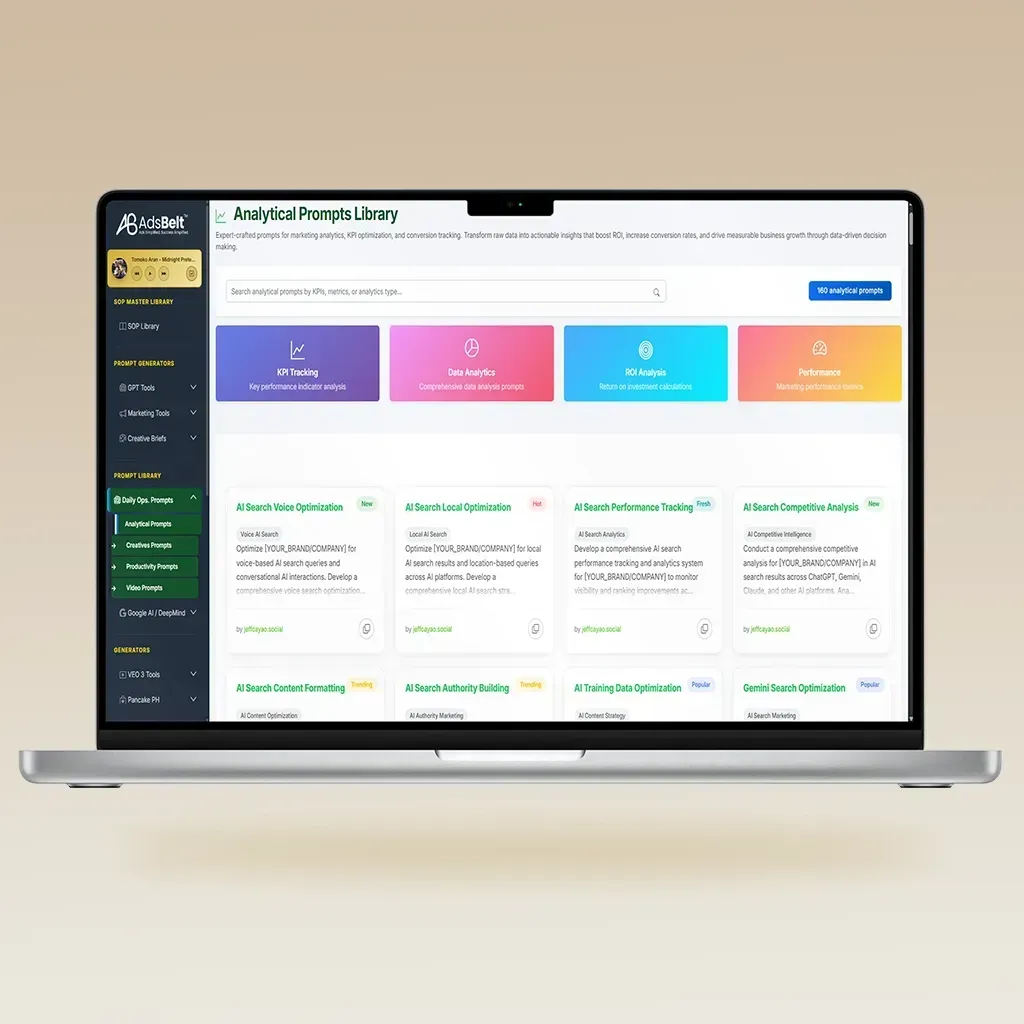
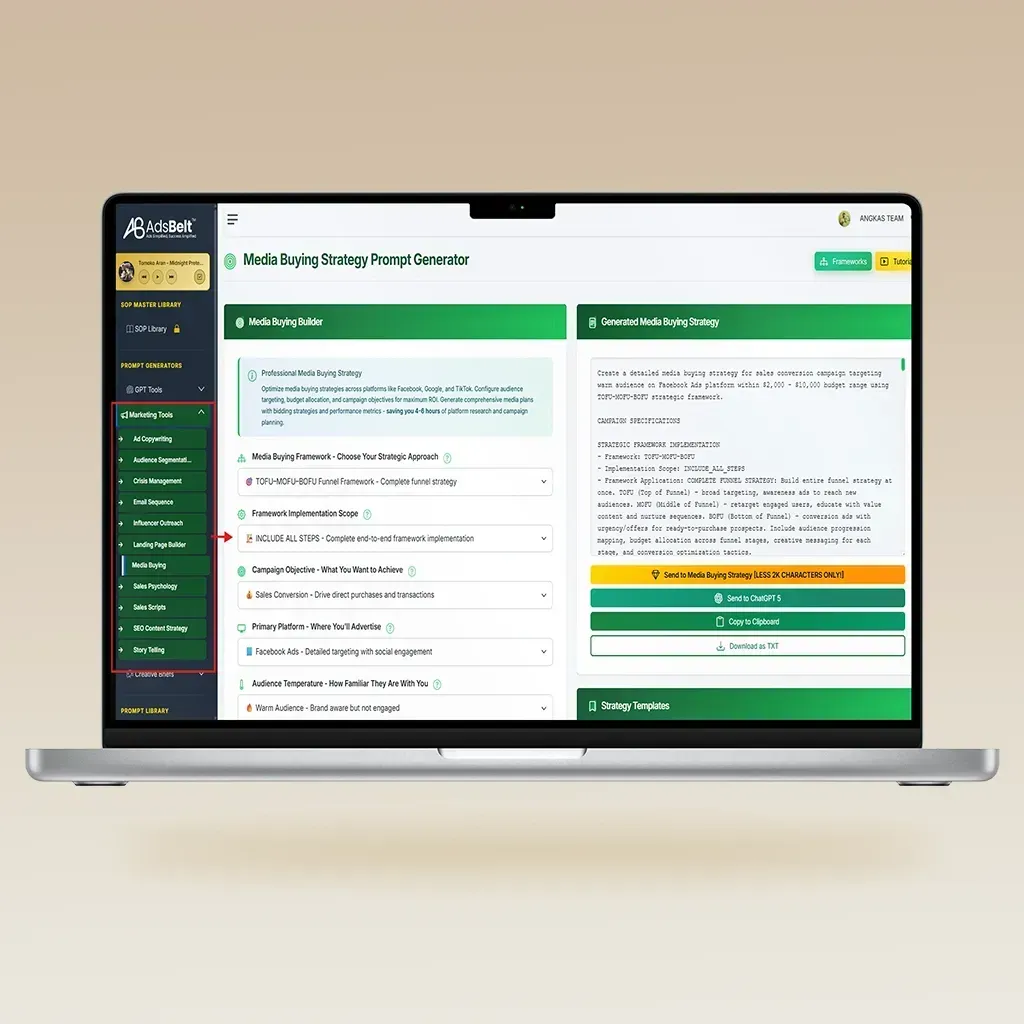
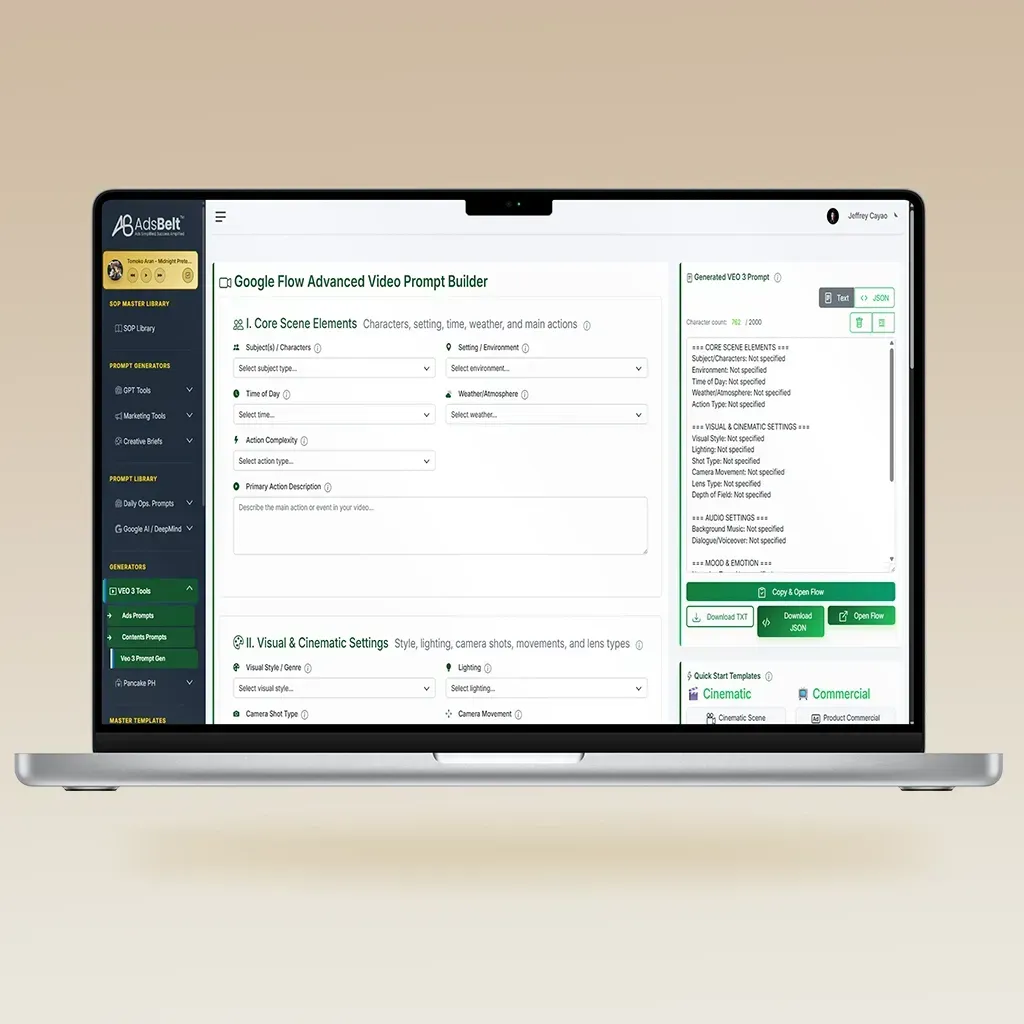
Lifetime access to all live tools: 100+ GPTs, Marketing PromptGen™, Daily Ops Prompts, Nano Banana, VEO 3, Botcake Instructions Builder. No subscription.
OR GET FREE ACCESS TO CREATIVE BRIEFS
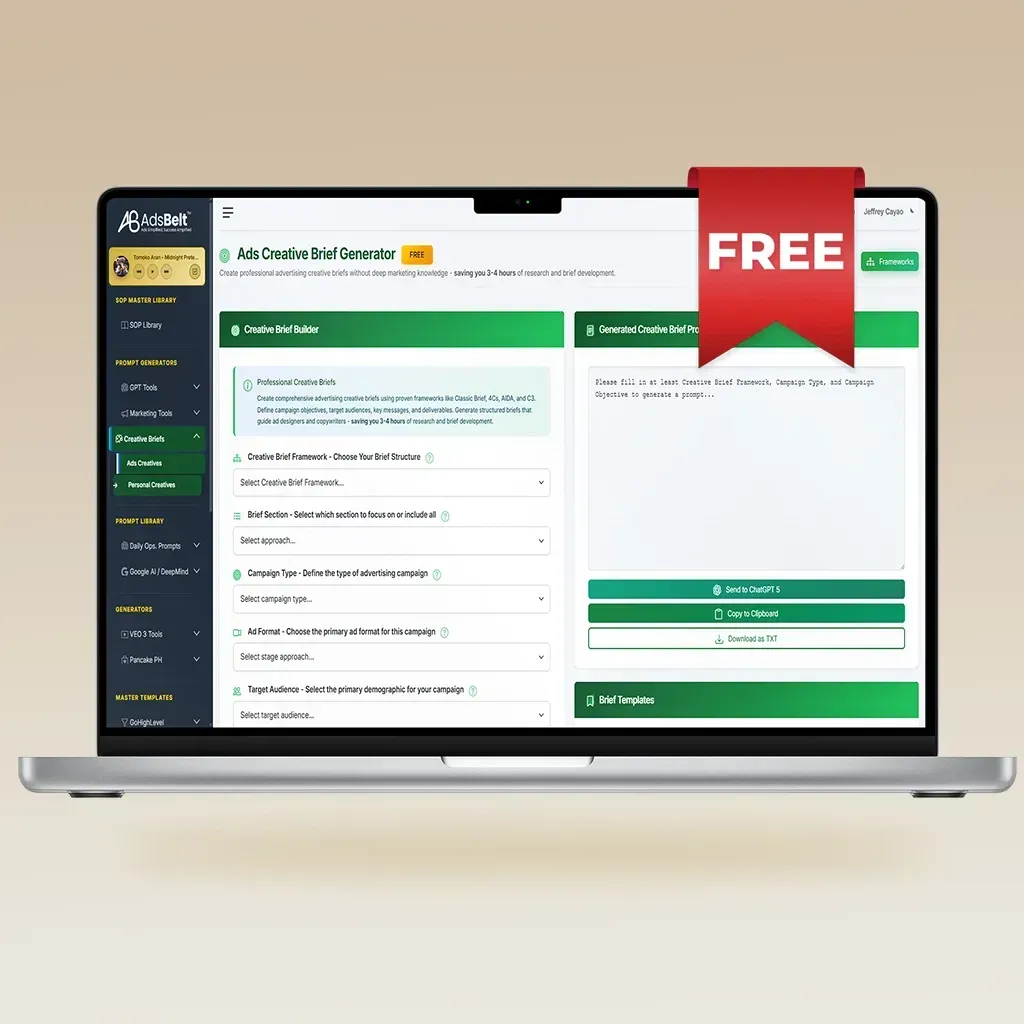
AdsBelt™ Prompt Generators
Creative Briefs PromptGen™
$5 Only FREE
BLOG CATEGORY
Check these out


© 2025 AdsBelt™ | All Rights Reserved
Ads Simplified, Success Amplified
📧 Email: hello@adsbelt.com
🌐 Website: www.adsbelt.com
☎️Phone: +1 (575) 733-8001
📍Address: 1209 Mountain Road PL NE, Albuquerque, NM 87110

Copyright 2025 All Rights Reserved | AdsBelt LLC | Unauthorized reproduction strictly prohibited